When you can see something
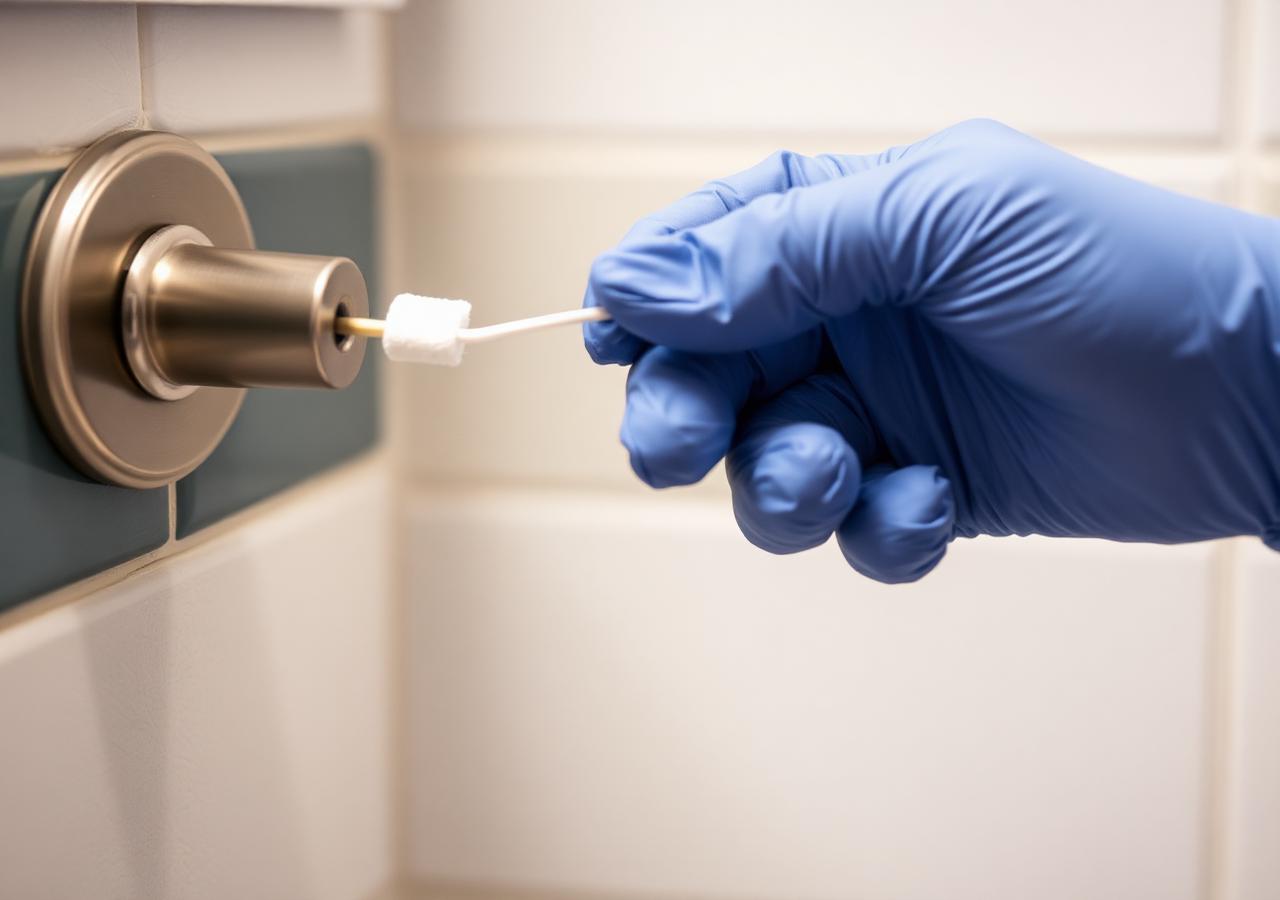
Discoloration on a bathroom ceiling, dark staining behind a refrigerator, fuzzy growth in a closet — surface mold testing exists for these moments. We collect a sample directly from the suspect material so the laboratory can confirm whether it is mold, what type, and at what density.
How tape-lift sampling works
A clear adhesive strip is pressed against the visible growth and lifted. The strip captures spores, hyphae, and surface material, which the laboratory examines microscopically. The technique is fast, non-destructive, and well established.
What the lab can tell you
Whether the material on the surface is mold or another substance, the genera present, and an estimate of growth density. This information helps decide remediation scope and whether further testing — air sampling, moisture investigation — is needed.
Used across LA properties
Common surface-testing locations across Los Angeles include bathroom ceilings, around windows in older buildings, behind appliances, baseboards in ground-floor units, and storage areas in basements and garages.
What's Included
- Tape-lift surface samples
- Non-destructive collection
- Walls, ceilings, tile, baseboards
- Accredited lab analysis
- Genus identification
- Growth density estimates
- Photographic documentation
- Plain-language report
Local inspections, certified laboratory analysis, and detailed reports for properties across Los Angeles, California.