Seeing what eyes cannot
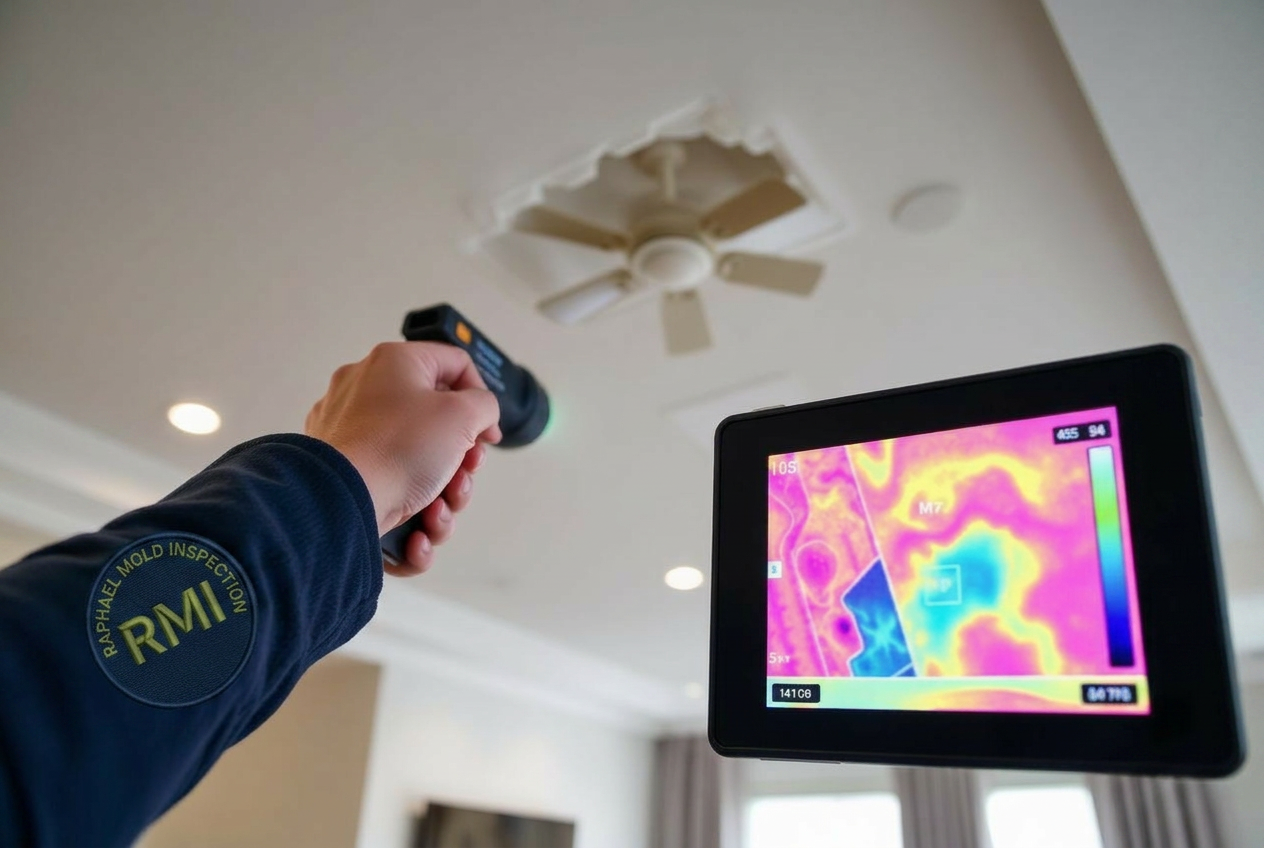
Thermal imaging cameras capture infrared radiation and translate surface temperature differences into a visible image. Moisture behind drywall is cooler than its surroundings; missing insulation creates warm or cold streaks; HVAC leaks form distinct patterns. Used by a trained inspector, the camera identifies suspect zones for further investigation.
Common findings in LA properties
Active roof leaks above living spaces; condensation behind air-handler closets; insulation gaps in attics that contribute to humidity; plumbing leaks behind tile; cold spots that indicate moisture-laden building materials. Los Angeles homes — with their mix of stucco, plaster, and modern drywall construction — each show distinct thermal patterns.
Paired with moisture meters
Thermal imaging identifies where to look; moisture meters confirm what is happening. Every Raphael Mold Inspection visit uses both together — the camera highlights anomalies, the meter quantifies them, and the report documents each finding with location and photographic evidence.
Non-destructive by design
Thermal imaging is non-invasive — no drilling, no opening walls. It is especially useful in finished spaces, occupied properties, and rentals where minimizing disruption matters.
What's Included
- Professional infrared camera
- Walls, ceilings, attics, crawl spaces
- Moisture and water-loss patterns
- Insulation gap detection
- HVAC and air leak indicators
- Paired with moisture meter readings
- Photographic documentation
- Non-destructive testing
Local inspections, certified laboratory analysis, and detailed reports for properties across Los Angeles, California.